Full speed ahead.
Globally connected, locally anchored: The driving force of world trade in the digital and ecological transformation.
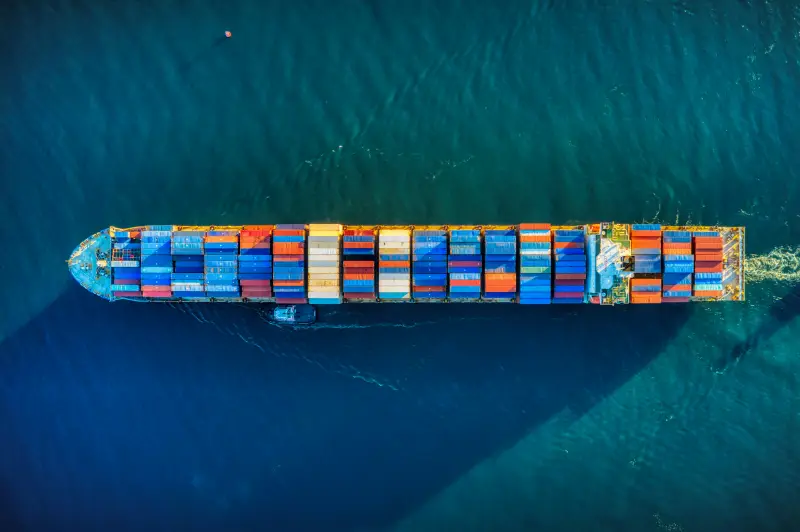
Ports, Ships & Oceans.
Over 90% of global cargo traffic is handled by sea. However, the industry is in transition: stricter environmental regulations (CII, EEXI), the digitization of onboard and land operations, and the immense pressure on global supply chains demand new solutions.
We understand the nuances between tramp and liner shipping, are aware of the challenges in ship management, and know that a superintendent is more than just a technical inspector. We combine traditional Hanseatic merchant practices with modern headhunting.
Value chain
The maritime value chain is a highly complex interplay of various actors that must interact smoothly to ensure global goods flow:
1. Shipping Company & Ship Management:
The core of the industry. Here, the technical (Technical Management) and commercial (Commercial Management) management of the fleet takes place. From crewing to chartering to maintenance – assets are managed here.
2. Ship Operations & Crewing:
The operational level on board. Captains, officers, and engineers ensure safe transport. Onshore crew management takes care of rotation, training, and certification of seafarers in a global labor market.
3. Ports & Terminals:
The interfaces to land logistics. Terminal Operating Systems (TOS), port agencies, and stevedoring are crucial for quick turnaround times (loading and unloading operations). Efficient ports are bottlenecks in the world economy.
4. Maritime Services:
A wide range of essential services: ship brokers (brokerage), marine insurers (P&I clubs), classification societies (DNV, LR, etc.), and ship financiers. This niche requires highly specialized expertise.
5. Offshore & Energy:
Growth beyond traditional shipping. Installation and maintenance of offshore wind farms, operation of Service Operation Vessels (SOV), and platform supply vessels. A growth market for the energy transition.
Market dynamics
Decarbonization & "Fuel Transition"
The probably greatest challenge. Shipowners today have to order ships (25 years lifespan) without being sure which fuel will prevail. A billion-dollar investment risk.
Crew shortage & welfare
There is a shortage of officers and specialized ratings. To attract talent, shipping companies need to offer better rotation (work-life balance), internet onboard, and career paths.
Consolidation & Alliances
In container shipping, a few large alliances dominate. In ship management as well, companies are joining forces to take advantage of economies of scale in procurement and IT.
Digitization & Cyber Security
Networked ships are vulnerable. Cyber security on board is as critical as fire safety. At the same time, data enables new business models.
Subsegments
Container shipping (Liner)
The pace setter of globalization. Transport of finished goods in standardized containers. Dominated by global shipping companies and liner services.
Tramp shipping & bulk
Transport of bulk goods (ore, coal, grain). Goes where the cargo is. Very volatile and directly dependent on the global economy.
Tanker & Gas (Energie)
Transport of crude oil, products, LNG, and LPG. Highest safety standards (vetting processes of the oil companies).
Offshore Wind & Service
Special ships (CTV, SOV, Installation Vessels) for the construction and operation of wind farms. Booming sector due to the energy transition.
Cruise & Passenger
Floating hotels and ferries. Focus on hospitality, guest experience, and logistics for thousands of people on board.
Our customers in the industry





Regulation & Standards
The High Seas are not a lawless space but one of the most regulated sectors, driven by international agreements from the IMO (International Maritime Organization):
- IMO 2030/2050 Decarbonization Targets: Massive reduction of CO2 emissions, which forces investments in new drives and retrofits.
- CII & EEXI: The "Carbon Intensity Indicator" assesses ships (A-E Rating). Ships with poor ratings risk being phased out of the market ("Stranded Assets"), putting fleet managers under pressure to act.
- EU ETS (Emissions Trading): Since 2024, shipping is part of the European emissions trading scheme. Shipping companies must pay for CO2 emissions – a game changer for cost calculations.
- ISPS Code: Strict security standards for risk prevention on ships and in port facilities (anti-piracy, terrorism prevention).
- Maritime Labour Convention (MLC 2006): The "Bill of Rights" for seafarers, which regulates and monitors working and living standards on board worldwide.
Technology & Data
Digitalization is the key to more efficiency and safety on the oceans:
- Smart Shipping & IoT: Sensors monitor machine data, consumption, and performance in real time. This enables "Predictive Maintenance" and reduces downtime.
- Connectivity (LEO satellites): Starlink and others bring high-speed internet to the high seas. This not only improves ship operations but is crucial for crew welfare (contact with family).
- Digital Twins: Virtual representations of ships assist in the design process and in simulating operational states to optimize hydrodynamics.
- Autonomous Shipping (MASS): From assistance systems to remotely operated vessels. Autonomous concepts are already becoming a reality, especially in the short-sea sector and for ferries.
Sustainability & Transformation
"Green Shipping" is the dominant theme of the next decades. The industry must reinvent itself:
- Alternative Fuels: The farewell to heavy fuel oil (HFO). Methanol, ammonia, and LNG (as a bridging technology) are in the race. Each option requires new engine technology and bunkering infrastructure.
- Wind-Assisted Propulsion: A return to wind – but high-tech. Flettner rotors, wingsails, or kites assist propulsion and save 5-20% fuel.
- Hull & Propeller Optimization: Air Lubrication, underwater cleaning robots, and special coatings minimize water resistance.
- Recycling & Hazardous Materials: The Hong Kong Convention regulates safe and environmentally friendly ship recycling at the end of the lifecycle.
Outlook
The maritime industry is navigating in turbulent yet promising waters. On one hand, the shortage of skilled workers on board and on land is causing bottlenecks. Traditional seafaring nations are struggling with concerns about the next generation, while the demands for technical expertise (cybersecurity, high-voltage systems) are increasing. On the other hand, geopolitics (de-globalization, nearshoring) is forcing more flexible routes and smaller batch sizes. Those who want to succeed in this environment must act agile and data-driven. The separation between "ship" and "office" is dissolving – ships are becoming floating offices, integrated into digital supply chains.
Are you looking for maritime experts?
Whether Superintendent, Crewing Manager or IT Specialist for Maritime Software – we know the market and the people who can distinguish "seaman's yarn" from true expertise. Let's hire us.
Arrange conversation