Forwarding & Transport
The lifeblood of the economy: Connected logistics, digital supply chains & sustainable change
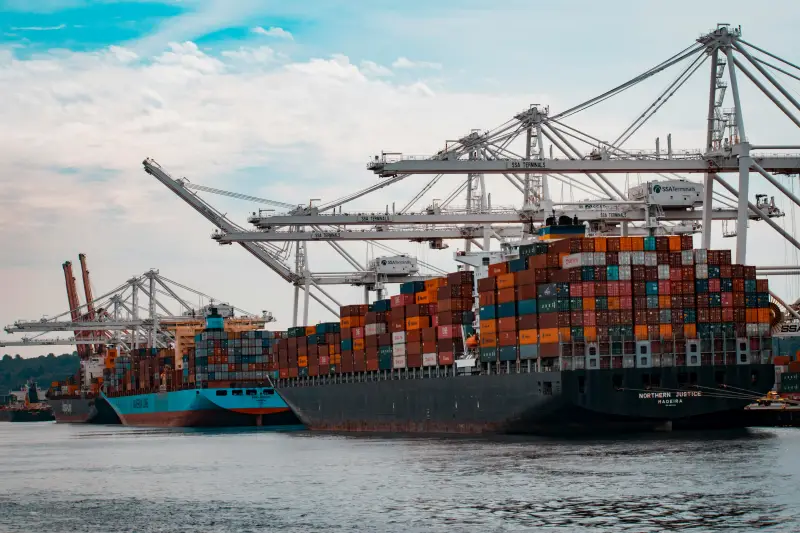
Economic engine & Critical infrastructure
The freight and transport industry forms the backbone of global division of labor. It ensures that raw materials, components, and consumer goods reach their destinations reliably, punctually, and cost-effectively. In Germany, one of the most efficient logistics locations in the world, this sector is more than just infrastructure: with over 300 billion euros in revenue and over 3 million employees, it is a central economic engine.
However, the industry is facing a paradigm shift. The era of pure cost optimization is giving way to a new prioritization of resilience, transparency, and environmental responsibility. Global supply chain disruptions, geopolitical uncertainties, and the acute shortage of skilled workers are forcing companies to rethink their networks. At the same time, digitization—from AI-supported route planning to autonomous intralogistics—opens up completely new efficiency potentials. Those who invest in logistics today invest in the stability of tomorrow's economy.
Value chain
The modern logistics chain has evolved from simple transportation services to a complex ecosystem. The depth of value creation varies depending on specialization but typically includes the following stages:
1. Planning & Network Design:
Analysis of goods flows, location planning for warehouses/hubs, and selection of optimal transport modes (Modal Split). This is where cost structure and service level are determined.
2. Order Management & Dispatching:
Digital acceptance of transport orders, capacity checks, and assignment to own fleets or subcontractors. Use of modern TMS (Transport Management Systems) to avoid empty runs.
3. Physical Transport Execution (Line-Haul):
The actual movement of goods between sources and sinks – whether by truck, train, ship, or airplane. This also includes handling at terminals and cross-docking facilities.
4. Storage & Contract Logistics:
More than just "storage": picking, packaging, quality control, and returns management as an integral part of production supply or e-commerce delivery.
5. Last Mile & Delivery:
The fine distribution to the end customer (B2B or B2C), characterized by high stop density, punctuality, and an increasing number of electric delivery vehicles.
Market dynamics
Staff shortages & demographics
The aging of the driving workforce is met with a lack of new recruits. This drives up labor costs and forces new working time models as well as investments in driver comfort.
Digital price pressure & platforms
Digital freight exchanges radically increase market transparency. Comparability of freight rates compresses margins in standard business, which makes a shift to specialized services (Value Added Services) necessary.
Volatility & Resilience ("Bullwhip Effect")
Fluctuating demand and external shocks (geopolitics, pandemics) require agile supply chains. The focus is shifting from pure inventory minimization to strategic safety buffers.
Decarbonization pressure
Rising toll fees (CO2 component), customer demands for "zero-emission" transport, and ESG reporting obligations are turning sustainability from an image issue into a hard cost factor.
Infrastructure & Renovation Backlog
Dilapidated bridges, ongoing construction sites on highways, and an overloaded rail network lead to unproductive waiting times and planning uncertainties that can hardly be compensated for by internal efficiency.
Subsegments
Road freight transport (FTL/LTL)
The classical transport of full loads (Full Truck Load) or partial loads. Highly competitive, strongly fragmented, dominated by medium-sized carriers.
Contract logistics & warehousing
Long-term takeover of logistical processes (storage, picking, assembly) for industrial and retail customers. High value creation and customer loyalty.
KEP services (Courier, Express, Package)
Driven by the e-commerce boom. Focus on speed, small shipments, and B2C delivery. Technology drivers in the "last mile".
System transports & general cargo
Networked hub-and-spoke systems for comprehensive transportation of palletized goods within 24/48 hours. High fixed costs due to network infrastructure.
Special & Heavy Load Logistics
Transport with special requirements: oversized, heavy loads, temperature-controlled transport (pharma/food) or hazardous goods. Less price-sensitive, high expertise required.
Our customers in the industry


Regulation & Standards
No industry is as heavily regulated and controlled as the transport sector. This serves security, fair competition, and environmental protection:
- EU Mobility Package: A comprehensive reform package aimed at improving working conditions for drivers (return obligation, accommodation) and regulating market access (cabotage restrictions).
- Supply Chain Due Diligence Act (LkSG): Obligates companies to conduct risk assessments in their supply chains regarding human rights and environmental standards – this affects logistics service providers as direct suppliers.
- Driving and Rest Times: Strict regulations to prevent fatigue, controlled by digital tachographs. Violations result in substantial fines for vehicle owners and dispatchers.
- Hazardous Goods Regulations (ADR/RID/IMDG): Complex regulations for the transport of dangerous goods that require special vehicles, equipment, and driver training.
- CO2 Toll & Emissions Trading: The introduction of the CO2 component in the truck toll significantly increases the cost of fossil transport and creates economic incentives for emissions-free drives.
Technology & Data
Technology is the decisive lever to address margin pressure and personnel shortages. Digitalization permeates all areas:
- Data Integration & Visibility: Shippers today expect "Amazon-like" transparency for B2B shipments. Platforms (Real-Time Transportation Visibility Platforms) aggregate data from telematics systems for precise ETA calculations.
- Artificial Intelligence (AI): AI dynamically optimizes route plans considering traffic, weather, and time windows. In the warehouse, algorithms manage the flow of goods (Chaotic Inventory Management) and predict order volumes.
- Automation & Robotics: Autonomous Mobile Robots (AMR) assist in order picking. In road transport, autonomous driving (Level 4) is being tested in hub-to-hub operations to combat the driver shortage.
- Digital Document Management: The transition from paper waybills to eCMR and digital delivery notes (Proof of Delivery via App) accelerates billing processes and reduces administrative costs.
Sustainability & Transformation
"Green Logistics" is no longer a marketing buzzword but a hard requirement from investors and customers.
- Drive change in road freight transport: The rise of electromobility (battery-electric) for distribution transport is in full swing. For long distances, electric trucks (megawatt charging) compete with hydrogen fuel cell technology and bio-LNG as a bridging solution.
- Modal Shift: Politically and ecologically desired shift from road to the more energy-efficient rail (combined transport). However, bottlenecks in the rail network often still hinder this potential.
- Carbon Footprinting: The precise measurement and disclosure of CO2 emissions per shipment (according to ISO 14083) is becoming the standard for tenders.
- Circular Economy: Logistics companies are increasingly taking responsibility for closing material loops (recycling logistics, reusable systems) to minimize waste.
Outlook
The logistics of the future will be more connected, greener, and more volatile.
The pressure for consolidation will continue: Small market participants without digital interfaces will disappear or retreat into niches (special transports). Digital forwarders and traditional logistics companies will increasingly merge ("Digilog").
The competition for labor will be the limiting factor for growth. Employer attractiveness (work-life balance, modern fleets) will become a matter of survival.
At the same time, nearshoring trends (production closer to the sales market) will change global goods flows, which will place new demands on regional logistics networks and storage capacities.
Are you looking for experts in this field?
The competition for skilled workers in logistics is intense. We have a strong network of decision-makers and specialists in forwarding, transport, and supply chain management. Let's discuss your needs.
Schedule a conversation